Day 1
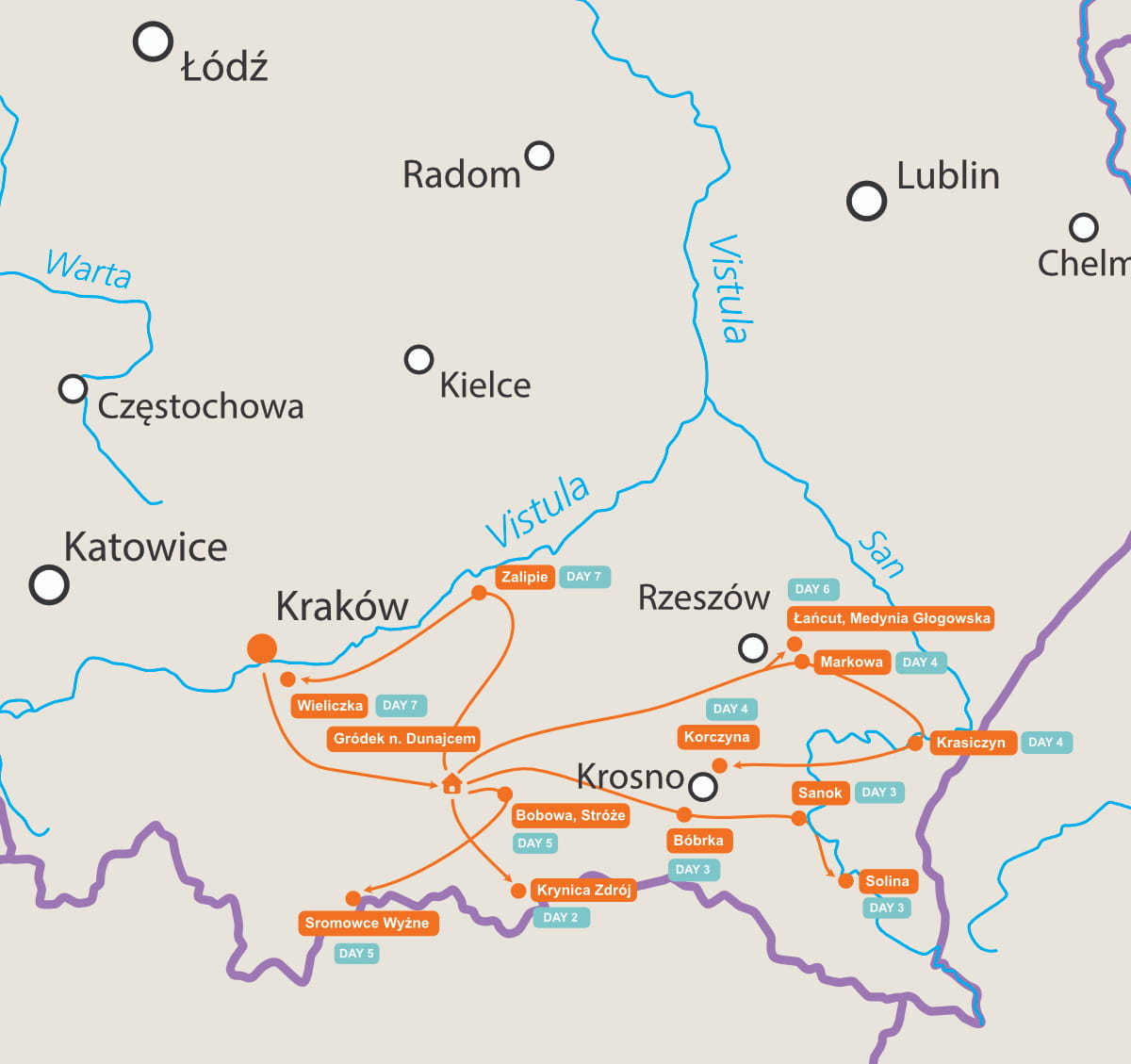
Krakow – Grodek nad Dunajcem
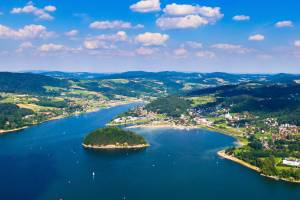
Twilight on the Shores of Lake Roznow
Arrival in Krakow and a private transfer to Grodek nad Dunajcem.
Accommodation at the 4-star Hotel Lemon Resort Spa, a combination of design and modern architecture integrated into the picturesque landscape. The village is an excellent starting point for exploring local attractions and is also ideal for those seeking a deep connection with nature.
The scenic landscapes of the Roznow Foothills, the tranquil waters of Lake Roznow, and the surrounding Beskid forests create a perfect setting for relaxation.
The remainder of the day is at leisure.
Day 2
Grodek nad Dunajcem – Kwiaton – Krynica Zdroj – Grodek nad Dunajcem
Lemko Heritage
The Most Recognizable Lemko Of All Time: Andy Warhol
A great deal of nostalgia is associated with “Lemkovyna” — the Lemko minority’s ancestral homeland nestled in the Carpathian Mountains along the Poland–Slovakia border. As a result of the post-war Communist authorities’ forced resettlement, the Lemkos were displaced from their native lands. We will walk along the paths of this truly unusual culture.
A visit to the UNESCO-protected St. Paraskeva Church in Kwiaton makes a remarkable start to the day. This best-preserved Lemko church in Poland, known as a wooden tservka, delights with its polychrome-painted interior and magnificent iconostasis.
Nearby lies Krynica-Zdroj, the pearl of Polish health resorts. We will soak up its elegant spa architecture and view the town through the eyes of its most famous admirer, Nikifor Krynicki. Underestimated for most of his life, this Lemko self-taught artist is now widely regarded as one of the world’s finest naïve painters. His works were exhibited in Paris, Amsterdam, New York, and Israel.
The Unique Treetop Path
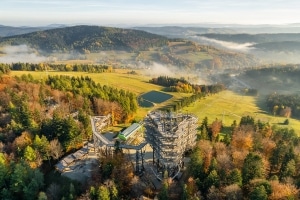
Not to be missed in Krynica-Zdroj is the wooden observation tower. A walk among the treetops, this one-of-a-kind attraction offers fabulous views, and in good weather even the Tatras are visible. The tower is 49.5 meters high, and its structure is impressive and architecturally distinctive.
Eating is culture, which is why you should savor classic Lemko dishes. Must-try specialties include kiselycia — a sourdough soup with an egg or sausage — haluszki, noodles made of grated potatoes served with goulash, and tertianyky, potato pancakes baked on cabbage leaves. A hot mulled wine or beer makes the perfect pairing.
Return to the hotel.
Day 3
Grodek nad Dunajcem – Bobrka – Sanok – Solina – Grodek nad Dunajcem
Between the Deep San and Surreal Dreams
The Patent For Distillation Of Petroleum Was Granted To Poles
Some 150 years ago, Bobrka was a poor mountain village, but in the 19th century its fortunes changed dramatically, bringing wealth to the local population. Tucked away in the woods near the Slovak border lies one of the most important discoveries of the last 200 years.
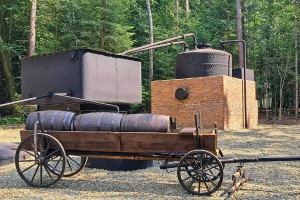
Bobrka is home to a museum dedicated to Ignacy Lukasiewicz, constructor of the world’s first crude oil refinery and inventor of the first modern kerosene lamp, still recognizable today in millions of households across developing countries. The open-air museum, built around a hand-dug 19th-century oil well, is listed on the European Route of Industrial Heritage.
The Surrealist Dream By Beksinski
Sanok boasts an outstanding collection of works by Zdzislaw Beksinski, the master of surreal art. The gallery, located inside Sanok Castle, includes extensive documentation of his life, from childhood drawings to video diaries, as well as a reconstruction of his entire studio with original equipment.
Beksinski’s paintings challenge the imagination — more mysterious than Dali and more haunting than Giger. This is a visit that leaves a lasting impression.
The Bieszczady Sea
Solina Lake, set in the heart of the Bieszczady Mountains, is as popular as the peaks that surround it. Created by damming the San River, it is Poland’s largest artificial reservoir. A boat trip on the so-called Bieszczady Sea offers a peaceful and immersive way to connect with nature.
Day 4
Grodek nad Dunajcem – Markowa – Krasiczyn – Korczyna – Grodek nad Dunajcem
Lessons in Humanity and the Art of Indulgence Learn From The Locals
In the village of Markowa, we visit the Ulma Family Museum of Poles Who Saved Jews in World War II. Recognized as Righteous Among the Nations, the Ulma family became symbols of heroism and sacrifice during the war.
Secluded Gem
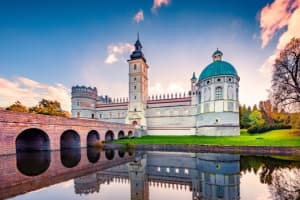
The beautiful Renaissance Krasiczyn Castle remains well off the beaten path. Built in the form of a quadrangle by an Italian architect for the Krasicki family, it features whitewashed walls decorated with unique sgraffito, four ornate towers, a spacious arcaded courtyard, and a lovely English-style park.
The four towers symbolize different aspects of life: divine, royal, noble, and untamed nature.
Learn From The Locals: Handcrafted Chocolate
Before returning to the hotel, treat yourself to artisanal chocolates. Thanks to Miroslaw Pelczar, a master chocolatier, Korczyna has earned a place on the radar of chocolate lovers. The warm atmosphere of his chocolate factory, combined with a wide variety of chocolates, pastries, and ice cream, makes this a truly sweet stop.
Day 5
Grodek nad Dunajcem – Bobowa – Stroze – Sromowce wyzne – Grodek nad Dunajcem
Living Traditions Learn From The Locals
Learn From The Locals: At Some Point, The Needle Began To Dance…
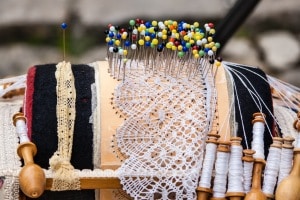
Lacemaking may seem like a dying art, but in Bobowa it has never lost its shine. From delicate doilies to elements of dresses and elaborate tablecloths, handmade bobbin lace has brought lasting fame to this town.
Each year, Bobowa hosts the International Bobbin Lace Festival, attended by lace-makers from across Europe. One of the region’s most accomplished artists is Ewa Szpila, a multiple competition winner and holder of the title of the fastest lace-maker. Today, she creates lace jewelry, giving new life to traditional lacemaking and helping preserve this time-honored technique. She will introduce us to the secrets and challenges of this sophisticated craft.
Learn From The Locals: Raw Honey – A Gift From Nature
A visit to the Sadecki Bartnik apiary in Stroze offers insight into the world of honey. Founded by Anna and Janusz Kasztelewicz, the family company treats beekeeping not merely as a profession, but as a passion. We will learn about honey varieties and their health benefits. Lunch is possible on site, featuring honey cake and mead.
The Dunajec River Rafting, Quality Time On The Water
One of the highlights on the Polish–Slovak border is a traditional raft expedition on the Dunajec River, a custom dating back to the 19th century. This unforgettable journey follows a swift-flowing mountain river through a rock canyon with cliffs rising up to 300 meters on both sides. The wooden rafts, largely unchanged over the years, are navigated by local highlanders.
Return to the hotel.
Day 6
Grodek nad Dunajcem – Lancut – Medynia Glogowska – Grodek nad Dunajcem
The Grandeur of Palaces and the Wisdom of Clay Learn From The Locals
The Grandeur Of The Mighty
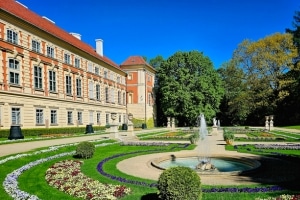
The Subcarpathian voivodeship abounds in historic residences and gardens that retain the charm of bygone eras. Today we travel to Lancut Castle, a magnificent example of Baroque architecture. Refurbished in the late 18th century, it became a lavish artistic salon that hosted Louis XIII of France and Emperor Franz Jozef of Austria.
Just outside the English-style park surrounding the residence stands the Baroque synagogue with its bimah-tower. Lancut forms part of a Chassidic route tracing Jewish communities across southeastern Poland and Ukraine. Two prominent Hassidic leaders associated with the town are Elimelech and Jakub Jicchak.
Among local dining traditions, the Potter’s Inn in Medynia Glogowska stands out. Here you can sample regional specialties such as proziaki — bread rolls topped with marmalade or cheese — and pierogi with various fillings.
Learn From The Locals: The Ones Who See With Their Hands
Pottery traditions in the Lancut region reflect generations of craftsmanship. Andrzej Plizga comes from a family with deep-rooted pottery heritage. Together with his wife Barbara and daughter Karolina, he treats clay as a way of telling stories inspired by nature.
In their ceramic studio, we will witness the patience, skill, and passion behind this slow and mindful craft, guided by the artisans themselves.
Return to the hotel.
Day 7
Grodek nad Dunajcem – Zalipie – Wieliczka – Krakow
A Palette of Painted Flowers and Walls of Salt Learn From The Locals
Learn From The Locals: Flower Garlands Of Zalipie
Our journey continues to Zalipie, known as the most colorful village in Poland. Local women decorate stoves, plates, aprons, fences, wells, and even dog houses with vibrant floral motifs. These painted flowers also adorn the village church, school, and other public buildings.
The most prominent local artist was Felicja Curylowa, whose historic farmhouse now serves as a museum. At the House of Artists, the village’s cultural center, we will learn about the origins and meaning of this distinctive tradition.
Poland’s Majestic „Underground Salt Cathedral”
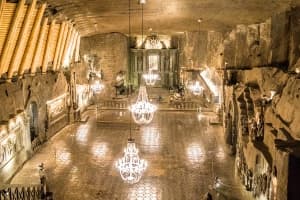
On the way back to Krakow, we visit the UNESCO-listed Wieliczka Salt Mine. Beneath the surface lies an extraordinary underground world of tunnels, chapels, lakes, and sculptures, almost entirely carved from rock salt.
The highlight is St. Kinga’s Chapel, adorned with intricate salt carvings, including a replica of Leonardo da Vinci’s “The Last Supper,” and chandeliers made of salt crystals. Overnight stay in Krakow.
Day 8
Krakow
Departure
Private transfer to Krakow Airport for the departure flight.