
Warsaw: A Complete Guide to Poland’s Capital
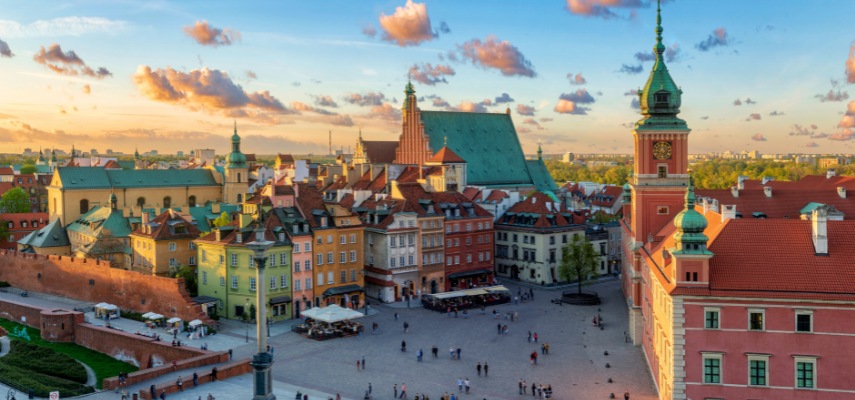
Warsaw was almost entirely destroyed in 1944 — and then rebuilt, brick by brick, from 18th-century paintings and photographs. That story defines the city more than any single landmark. Today’s Warsaw is a place where a meticulously reconstructed Old Town sits next to brutalist apartment blocks and glass skyscrapers, where a Chopin recital plays in a park that was a battlefield 80 years ago. It’s not the prettiest capital in Europe. It’s one of the most interesting.
This guide covers what to see, how to plan your time, where to eat, and how to get around — written for visitors planning their first trip.
At a Glance
- Best for: History (WWII, Cold War, Jewish heritage), museums, food, nightlife, architecture spanning seven centuries.
- How long to spend: 2–3 full days for the highlights. 4–5 if you want to include day trips (Żelazowa Wola, Kampinos National Park).
- Best time to visit: May–June and September–October. Warm enough to walk comfortably, fewer crowds than July–August. December is cold but atmospheric, with Christmas markets around Castle Square.
- Getting around: Compact centre, walkable. Two metro lines, extensive tram and bus network. A 75-minute ticket covers all public transport for about 4.40 PLN (~€1).
- Budget level: Significantly cheaper than Western European capitals. A good restaurant meal: 50–80 PLN (~€12–19). Museum entry: 15–30 PLN (~€3.50–7).
- Airport: Warsaw Chopin Airport (WAW), 10 km south of the centre. Regular buses and trains into town — a standard Zone 1 public transport ticket is enough, no airport surcharge.
What Makes Warsaw Different
Most European capitals evolved gradually. Warsaw was erased and started again.
By January 1945, roughly 85% of the city lay in ruins. The destruction wasn’t collateral damage — it was deliberate. After the Warsaw Uprising of August–October 1944, German forces systematically demolished the city block by block. What visitors see in the Old Town today is a post-war reconstruction so thorough it earned UNESCO World Heritage status in 1980 — not for its medieval architecture, but for the act of rebuilding itself.
That history is everywhere, but Warsaw doesn’t dwell on it. The city has a forward-facing energy that surprises most first-time visitors. The Vistula riverbank — neglected for decades — is now lined with bars, beaches, and cycling paths. Neighbourhoods like Praga, once rough around the edges, have become hubs of street art and independent restaurants. The food scene has matured from milk bars and pierogi into one of the most exciting in Central Europe.
The contrast is the point. Warsaw doesn’t smooth over its scars or pretend they’re not there. It just keeps building.
What to See and Do
The Old Town and Royal Castle
Warsaw’s Old Town (Stare Miasto) looks centuries old. Almost none of it is. The entire district was reduced to rubble during WWII and reconstructed in the 1950s using Canaletto’s 18th-century paintings as reference, along with architectural surveys, photographs, and fragments salvaged from the debris. The reconstruction is so precise that UNESCO recognised it in 1980 — one of very few sites honoured specifically for a reconstruction effort.
Start at Castle Square (Plac Zamkowy), anchored by the Sigismund III Vasa Column — the oldest secular monument in Warsaw, originally erected in 1644. The Royal Castle on the square’s eastern edge was the seat of Polish kings from the late 16th century. Its interiors were reconstructed after the war and now house an art collection, including two Rembrandts currently displayed in the Lanckoroński Gallery — Girl in a Picture Frame and A Scholar at his Writing Table.
From Castle Square, walk north into the Old Town Market Square (Rynek Starego Miasta). The colourful townhouses that ring the square all date to the post-war reconstruction, though their facades replicate designs from the 17th and 18th centuries. The Museum of Warsaw occupies the square’s entire northern frontage — eleven connected townhouses with one of the oldest surviving ceiling decorations in the city.
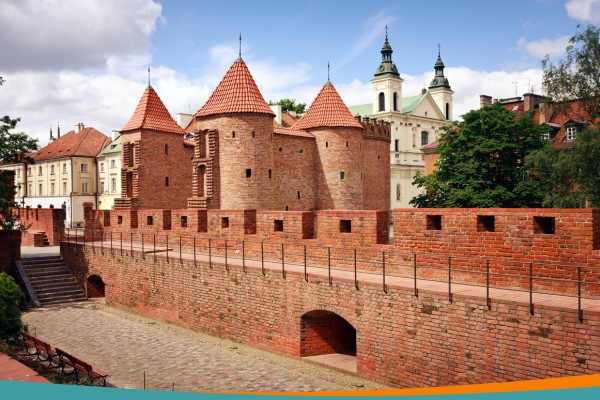
Continue north through the Barbican (a 16th-century defensive outpost, also reconstructed) into the New Town (Nowe Miasto), which despite the name dates to the 15th century. It’s quieter, less tourist-heavy, and home to the Maria Skłodowska-Curie Museum — the house where the double Nobel laureate was born in 1867.
Planning note: The Old Town is compact. You can see the main sights in 2–3 hours at a comfortable pace. Combine it with the Royal Route walk (see below) for a half-day itinerary.
The Royal Route
The Royal Route (Trakt Królewski) connects the Old Town to the southern districts along a roughly 4 km stretch. It’s one of the best walking routes in the city, passing most of Warsaw’s landmark buildings.
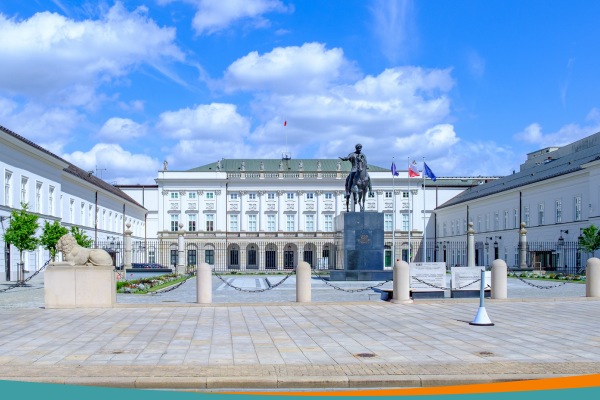
From Castle Square, head south along Krakowskie Przedmieście. This stretch passes the Presidential Palace, the University of Warsaw campus, and several Baroque churches — including St. Anne’s Church, one of Warsaw’s oldest buildings (construction started 1454), with a viewing terrace that offers a wide panorama of the Old Town.
The street becomes Nowy Świat, Warsaw’s main café and shopping strip — and one of the liveliest streets in the city, particularly on summer evenings.
The route continues south through Aleje Ujazdowskie (embassy district, with the Ujazdowski Castle housing a centre for contemporary art) and ends at Łazienki Królewskie — Warsaw’s largest park and one of its finest public spaces.
Planning note: Walking the full Royal Route takes about 1.5–2 hours without stops. With museum visits and coffee breaks, half a day.
Łazienki Królewskie (Royal Łazienki Park)
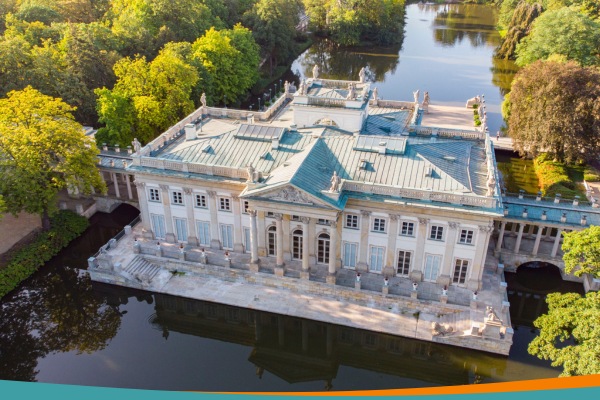
A 76-hectare park built as the summer residence of Poland’s last king, Stanisław August Poniatowski, in the late 18th century. The centrepiece is the Palace on the Isle — a neoclassical palace sitting on an artificial lake. Surrounding it: an amphitheatre modelled on a Roman theatre at Herculaneum, an orangery, several pavilions, and a famous Chopin monument where free piano recitals take place on summer Sundays (May–September).
The park is free to enter. Palace interiors require a ticket (around 25 PLN). It’s one of the best places in Warsaw simply to sit and watch the city go by — locals jog, walk dogs, and feed the resident peacocks and red squirrels.
Planning note: Allow 2–3 hours. Best combined with a walk down the Royal Route from the Old Town.
POLIN Museum of the History of Polish Jews
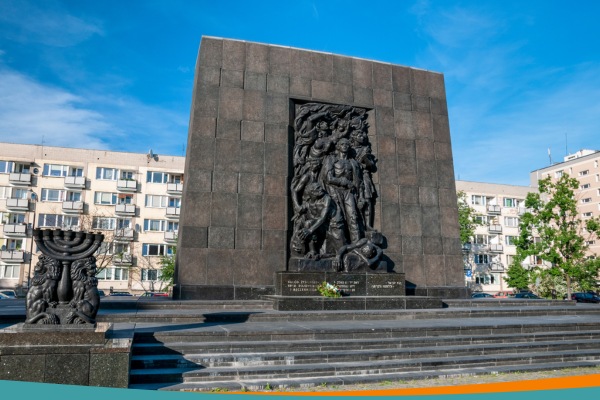
Located on the site of the former Warsaw Ghetto, POLIN is one of the most important museums in Poland. Its permanent exhibition spans 1,000 years of Jewish life in Poland — from the earliest settlements through the golden age of Jewish culture, the Holocaust, and the present.
The core exhibition uses immersive design: a full-scale reconstruction of a painted wooden synagogue ceiling (from the 17th-century Gwoździec Synagogue) is one of its centrepieces. Plan at least 2–3 hours for the permanent exhibition alone.
The museum faces the Monument to the Ghetto Heroes on its forecourt — marking the spot where the Warsaw Ghetto Uprising began in April 1943.
POLIN is currently open Monday, Wednesday, Thursday, Friday, and Sunday from 10:00 a.m. to 6:00 p.m., and Saturday from 10:00 a.m. to 8:00 p.m.; it is closed on Tuesdays. Last entry to the core exhibition is 2 hours before closing. Admission to the core exhibition, including the audio guide, temporary exhibition, and Legacy Gallery, currently costs 45 PLN regular and 35 PLN reduced, while Thursdays are free.
Warsaw Uprising Museum
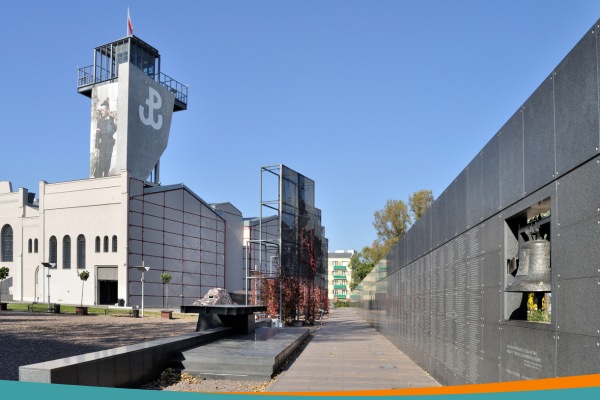
The Warsaw Uprising of 1 August – 2 October 1944 was the largest single resistance operation by any underground movement during WWII. Some 50,000 insurgents — many of them teenagers — fought German forces for 63 days before the city fell. Roughly 150,000–200,000 civilians died.
The museum, opened in 2004 on the 60th anniversary, tells this story through personal artefacts, audio testimonies, and a replica of the sewers insurgents used to move between positions. A 3D film shows the scale of Warsaw’s destruction from the air.
The museum is one of Warsaw’s most visited attractions and can get crowded, particularly on weekends and in summer. Arrive early or visit on a weekday.
Current ticket price — likely 25–30 PLN
Planning note: Allow 2–3 hours minimum. The museum is in the Wola district, about 20 minutes by tram from the Old Town.
Palace of Culture and Science
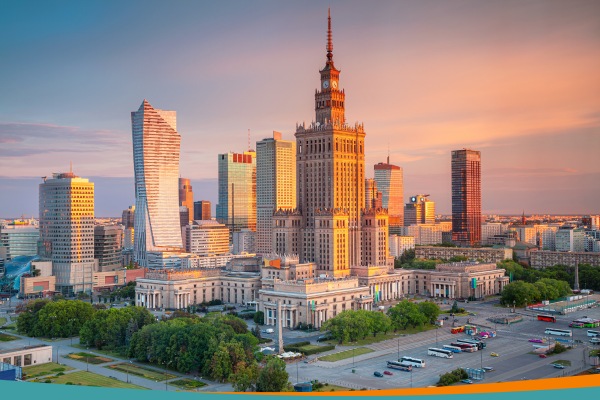
Love it or loathe it, the Palace of Culture and Science dominates Warsaw’s skyline. Built 1952–1955 as a “gift” from the Soviet Union (and Joseph Stalin personally), it stands 237 metres tall — still the tallest building in Poland. The architectural style is Socialist Realism crossed with the wedding-cake forms of Moscow’s “Seven Sisters” skyscrapers.
For decades, many Varsovians wanted it demolished. Today it’s become an ironic symbol of the city’s layered identity. The 30th-floor observation terrace gives the best panoramic view of Warsaw — and, as locals like to point out, it’s the one spot where you can’t see the Palace itself.
Inside: theatres, cinemas, a technical museum, university departments, and the congress hall where the Rolling Stones played in 1967, in one of the earliest major Western rock concerts behind the Iron Curtain.
Planning note: The viewing terrace is the main attraction for visitors. Allow 30–60 minutes.
Praga District
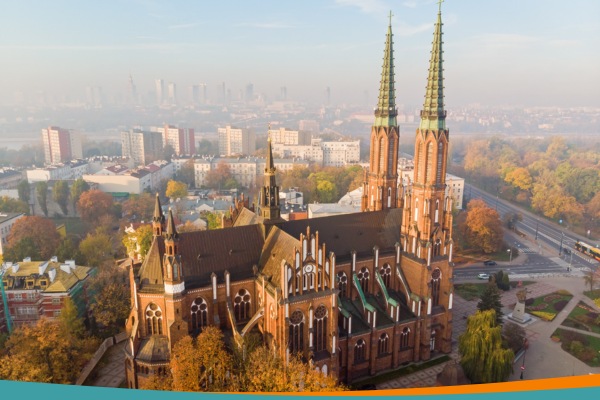
Cross the Vistula and you’re in Praga — Warsaw’s oldest neighbourhood on the river’s eastern bank. Unlike the left-bank city, Praga survived WWII largely intact (the Soviet army halted on this side while Warsaw burned). The buildings show their age: pre-war tenements, bullet-scarred facades, and Orthodox churches.
In recent years, Praga has become Warsaw’s most interesting district for street art, independent galleries, and restaurants. Key stops:
- Ząbkowska Street — Praga’s main artery, increasingly lined with cafés and bars in converted pre-war buildings.
- Neon Museum — a collection of Cold War–era neon signs salvaged from Warsaw’s buildings, displayed in a former factory. A genuinely unique museum.
- Bazar Różyckiego — one of Warsaw’s oldest markets, operating since the 1880s. It’s smaller and scruffier than it once was, but retains character.
- Saska Kępa — technically a separate neighbourhood south of Praga proper, with tree-lined streets, interwar villas, and excellent independent cafés. One of Warsaw’s most pleasant residential areas.
Planning note: Praga is an easy walk or tram ride from the Old Town (cross the Śląsko-Dąbrowski bridge). Allow half a day.
The Vistula Riverbank
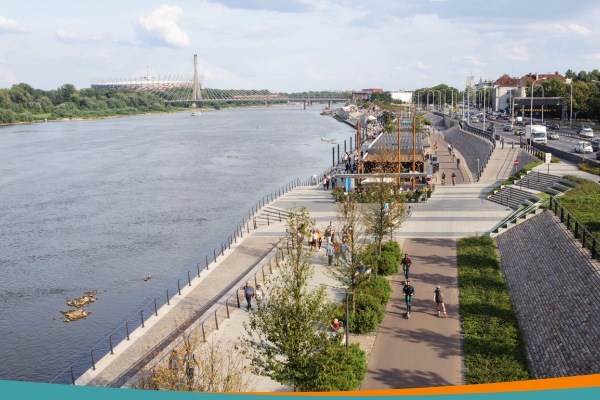
Warsaw’s relationship with its river has transformed in the past decade. The left-bank Vistula boulevards (Bulwary Wiślane), once neglected, are now a continuous promenade stretching several kilometres south from the Old Town. In summer: food trucks, outdoor bars, deck chairs, and floating venues on river barges.
The right bank (Praga side) is more wild — it’s one of the few stretches of un-channelled urban riverbank in any European capital, with sandy beaches and natural vegetation. A good place to walk or just sit with a beer on a summer evening.
Wilanów Palace
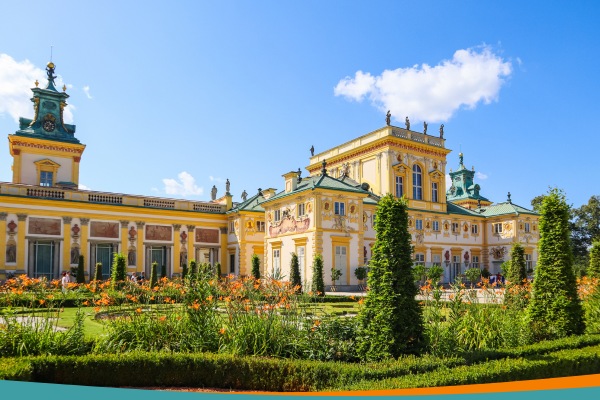
About 10 km south of the centre, Wilanów is sometimes called “the Polish Versailles” — which oversells it, but not by much. Built in the late 17th century as a summer residence for King Jan III Sobieski, it’s one of the few royal buildings in Warsaw that survived WWII intact. The interiors are original Baroque and the formal gardens are worth a separate visit.
Getting there: bus 116 or 180 from the centre, about 40 minutes. Better to combine with a half-day if you want to see the palace and gardens properly.
Beyond the Main Sights
- Powązki Cemetery — one of the oldest and most beautiful cemeteries in Europe, dating to 1790. Also adjacent: the Jewish Cemetery, with approximately 250,000 graves, many overgrown but hauntingly intact.
- Warsaw University Library rooftop garden — one of Europe’s largest rooftop gardens, open to the public. Free entry. Good views of the Vistula.
- Hala Mirowska — a 19th-century market hall in the city centre. Locals do their daily shopping here. One of the buildings still shows bullet holes from WWII.
- Fotoplastikon — a pre-war stereoscopic viewing device showing 3D photographs of old Warsaw. One of only a handful still operating anywhere in the world. Tucked into the basement of a building on Aleje Jerozolimskie.
- Copernicus Science Centre — the best science museum in Poland, excellent for families. On the Vistula riverbank.
Food and Drink

Warsaw’s food scene has evolved dramatically. Twenty years ago, the options were milk bars and hotel restaurants. Today the city has everything from street food to Michelin-recommended fine dining.
Traditional Polish food: Start with pierogi (dumplings), żurek (sour rye soup), and bigos (hunter’s stew). For an affordable, authentic experience, try a milk bar (bar mleczny) — cafeteria-style restaurants that date to the communist era, serving traditional dishes at low prices. They’re still popular with locals. Bar Mleczny Prasowy (near the Palace of Culture) and Bar Mleczny Familijny (in Praga) are reliable options.
Modern Polish: Warsaw’s best restaurants reinterpret Polish ingredients and techniques. The city is included in the MICHELIN Guide, with three one-star restaurants and several other recommended addresses, including Bib Gourmand selections.
Craft beer: Poland’s craft beer scene has exploded. Warsaw has dozens of specialist bars, many in the Śródmieście and Praga districts.
Coffee: Warsaw takes coffee seriously. The third-wave café scene is strong, particularly in Mokotów, Powiśle, and Saska Kępa.
Budget tip: Lunch at a milk bar typically costs 15–25 PLN (~€3.50–6). An evening meal at a mid-range restaurant: 60–100 PLN (~€14–24) per person with a drink. Warsaw remains one of the most affordable capital cities in the EU for eating out.
Getting Around
On foot: The city centre is walkable. Old Town to Łazienki Park is about 4 km — a pleasant walk down the Royal Route.
Public transport: Warsaw’s network of trams, buses, and two metro lines covers the entire city. Tickets are time-based (not zone-based for most tourist use — Zone 1 covers virtually everything you’ll want to see, including the airport). Key ticket prices:
- 20-minute ticket: 3.40 PLN
- 75-minute ticket: 4.40 PLN (best value for most journeys)
- 24-hour ticket: 15 PLN
Buy tickets from machines at metro stations and major stops, or use the moBiLET or SkyCash apps. Validate paper tickets immediately after boarding.
Metro: Two lines. M1 runs north–south. M2 runs east–west, connecting the centre to Praga across the river. Trains run every 3–5 minutes at peak times.
Trams: Warsaw’s tram network is extensive and scenic. Tram 22 runs a route that passes several major sights — sometimes recommended as a cheap sightseeing option.
From the airport: Warsaw Chopin Airport (WAW) is 10 km south of the centre. Bus 175 runs to the city centre. The S2/S3 suburban rail lines stop at Śródmieście (city centre) and Powiśle. Journey time: 25–35 minutes. A standard Zone 1 ticket is all you need.
Taxis and rideshare: Uber and Bolt operate in Warsaw and are generally cheaper than traditional taxis.
How Long to Stay
1 day: Tight but possible. Focus on the Old Town, Royal Route, and one major museum (POLIN or Warsaw Uprising Museum).
2 days: Comfortable for the main highlights. Day 1: Old Town, Royal Castle, Royal Route, Łazienki. Day 2: POLIN, Warsaw Uprising Museum, Praga, Vistula riverbank.
3 days: The ideal length. Add Wilanów Palace, more time in Praga, deeper museum visits, and an evening exploring Warsaw’s food and bar scene.
4–5 days: Enough to include day trips. Options: Żelazowa Wola (Chopin’s birthplace, 55 km west), Kampinos National Park (forest and dunes on Warsaw’s doorstep), or the town of Płock on the Vistula.
Day Trips from Warsaw
- Żelazowa Wola — Chopin’s birthplace, now a museum surrounded by a landscaped park. Piano recitals in the garden on summer weekends. About 55 km west of Warsaw, reachable by bus or car in about an hour.
- Kampinos National Park — a UNESCO Biosphere Reserve bordering Warsaw to the west. Sandy dunes, ancient forest, and WWII memorial sites. Good for a half-day hike.
- Łowicz — a small town known for its folk art tradition, colourful Corpus Christi processions, and open-air Skansen museum. About 90 km southwest.
Practical Information
Currency: Polish złoty (PLN). Card payments accepted almost everywhere — many places are cashless. ATMs are widely available.
Language: Polish. English is widely spoken in hotels, restaurants, and museums, especially by younger staff. Older residents may speak some German or Russian. A few Polish phrases go a long way.
Safety: Warsaw is one of the safest capital cities in Europe. Standard urban precautions apply — watch for pickpockets on busy trams and in tourist areas.
Tipping: 10% in restaurants is standard. Not expected in taxis or bars, but appreciated.
Power: Type C and E plugs (standard European two-pin). 230V.
SIM/data: Polish eSIMs and prepaid SIMs are cheap and easy to buy at the airport or in the city.
Warsaw’s Place in a Poland Trip
Most visitors to Poland combine Warsaw with Kraków (the country’s other major tourist city). The two are connected by frequent trains — the fastest take about 2 hours 20 minutes and run multiple times daily.
Warsaw also serves as a gateway to eastern Poland (Lublin, Białystok, the Masurian Lakes) and to the Tri-City of Gdańsk, Sopot, and Gdynia on the Baltic coast (train: about 2 hours 45 minutes to Gdańsk).
For visitors planning a broader tour of Poland, Warsaw works well as either a starting or finishing point, given its international airport connections.
Frequently Asked Questions
Is Warsaw worth visiting, or should I just go to Kraków? Both. They’re very different cities. Kraków is compact, picturesque, and focused on a well-preserved old centre. Warsaw is larger, more varied, and more complex — a city that rewards curiosity rather than casual sightseeing. If you have time for both, start with Warsaw and end with Kraków (or vice versa). The train connection makes combining them easy.
How many days do I need in Warsaw? Two full days cover the main sights comfortably. Three days is ideal if you want to explore beyond the centre, visit Wilanów, and experience the food scene properly.
Is Warsaw safe for tourists? Yes. Warsaw consistently ranks among the safest capital cities in Europe. Violent crime against tourists is extremely rare. Use standard precautions with valuables on public transport and in crowded areas.
What’s the best area to stay in? Śródmieście (city centre) is the most convenient — walking distance to the Old Town, museums, and nightlife. Powiśle is slightly quieter, close to the river and Łazienki Park. Praga suits visitors who prefer an off-centre, artsy neighbourhood.
Do I need cash in Warsaw? Rarely. Card payments (including contactless) are accepted almost everywhere, including at market stalls and food trucks. A small amount of cash is useful for some milk bars, public toilet attendants, and tipping.
Can I visit Auschwitz from Warsaw? Technically yes — day trips by train or organised tour are available — but it’s a long day (Oświęcim is about 300 km south). It makes far more sense to visit Auschwitz-Birkenau from Kraków, which is only 70 km away.
What’s the weather like? Continental climate with distinct seasons. Summers (June–August): warm, 20–30°C, occasional thunderstorms. Winters (December–February): cold, often below 0°C, with snow. Spring and autumn are mild and the best times for walking the city.

User Comments (0)