


A City That Changed the World
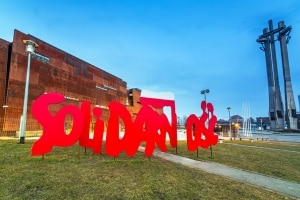
Arrival in Gdansk. You will be met at the airport and transferred by private car to your hotel.
Gdansk changed the course of history twice in the 20th century. In 1939, the first shots of World War II in Europe were fired at the nearby Westerplatte Peninsula. Decades later, it was here that a new Poland began to emerge, sparked by the combined efforts of the Solidarity movement and St. Pope John Paul II — a transformation that would ripple across the entire region.
The rest of the day is yours to enjoy at leisure.
Tracing the Beginnings of WWII
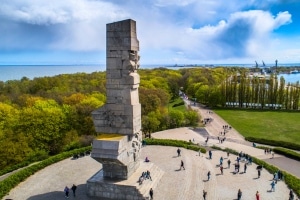
After breakfast, we begin the day with a guided visit to the Westerplatte Peninsula — the site of the first battle of World War II. There, we’ll walk among the preserved ruins of the defenders’ barracks and guardhouses.
It was here, on September 1, 1939 at 4:45 a.m., that the German battleship Schleswig-Holstein opened fire on the Polish military outpost. Although expected to hold out for only a few hours, the 182-man Polish garrison resisted the German forces for seven days, delaying the enemy’s advance and gaining time for national defense efforts. Their stand is remembered as one of the war’s first acts of heroism.
Later, we will visit the Museum of the Second World War — one of the most modern museums in Europe. Its architecture and design immerse visitors in the wartime experience, beginning with a descent into bunker-like exhibition levels that trace the human cost and consequences of the global conflict.
The remainder of the afternoon is free for your own exploration.
Inside the Wolf’s Lair
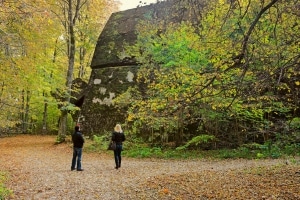
After breakfast, we depart for a full-day excursion to the Wolf’s Lair, located near the village of Gierloz. This remote, forested area once served as Adolf Hitler’s eastern headquarters during World War II.
It was here that he directed operations on the Eastern Front and survived the 1944 assassination attempt later portrayed in the film Valkyrie. At its peak, the complex included fifty bunkers, its own power system, an airstrip, a railroad terminus, and even a cinema. During excavations in 2019, new artifacts were uncovered, adding to the site’s historical significance.
After exploring the grounds, we return to Gdansk for the evening.
Exploseum: Inside Hitler’s Secret Factory
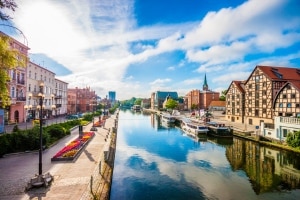
After breakfast, we depart Gdansk and travel toward Lodz, stopping en route near Bydgoszcz to visit the former German explosives factory known as DAG Fabrik Bromberg, now the Exploseum Museum.
This was one of Hitler’s secret industrial facilities, where the Reich produced substances such as nitroglycerin, TNT, and nitrobenzene, which were used in V1 missiles. The museum presents an interactive exhibition located in the original factory buildings, tracing the history of arms and weapons, as well as acts of resistance, conspiracy, and sabotage that took place within the facility.
After the visit, we continue on to Lodz, where we stay overnight.
Little Auschwitz and the Lodz Ghetto
We begin the day in Lodz with a visit to the Museum of Polish Children – Victims of Totalitarianism. Known as the “Little Auschwitz”, this German labor camp was established on the edge of the Lodz Ghetto for the specific purpose of humiliating Polish children. The museum honors the memory of these young victims and tells the story of the cruelty inflicted upon them during World War II.
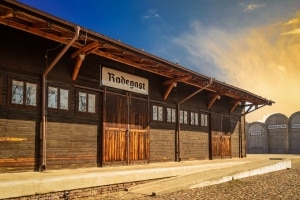
Next, we visit the Radegast Station, which served as the final point of departure for Jews deported from Western Europe. Our guided tour continues with a stop at the Litzmannstadt Ghetto Monument and the Survivors’ Park.
In the afternoon, we travel to Wroclaw for an overnight stay.
The Great Escape
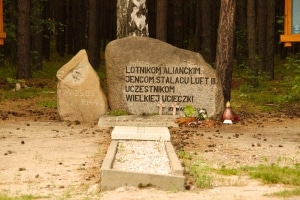
We set out on a round trip to Zagan to visit the site of Stalag Luft III, the prisoner-of-war camp where one of the most daring escapes of World War II took place.
Built in 1942, the camp was the setting for the mass breakout later immortalized in the film The Great Escape. At the Stalag Luft III Museum, we will see the reconstructed barracks and the preserved remains of the escape tunnels known as Tom, Dick, and Harry, dug by Allied airmen.
It is a truly sobering location — a powerful reminder that freedom is not free. We return to Wroclaw in the evening.
The Symbol of the Holocaust

We continue our journey with a visit to Auschwitz & Birkenau en route to Krakow. This site has become the symbol of the Holocaust — the place where the German Nazis deported at least 1.3 million people, representing 20 nationalities, mainly Jews and Poles.
When humanity scoured the depths of depravity, it also reached the heights of heroism. One example of such is Saint Maximilian Kolbe, remembered as a “martyr of charity”.
Another is the resistance hero who infiltrated Auschwitz — Polish army officer Witold Pilecki, whose firsthand account of the Holocaust became a key source of intelligence for the Western Allies. Thousands of other heroes could be named, as well.
An overnight stay in Krakow.
Acts of Courage: Schindler and the Polish Underground
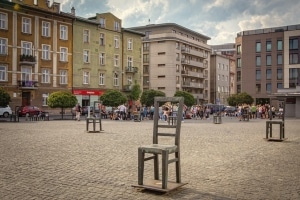
We begin the day in Krakow’s Podgorze district. Metal chairs scattered all over Ghetto Heroes Square, the main place for the deportation of Krakow’s Jews, will not let you pass without remembering its terrible past. Few Jews managed to escape from the ghetto; Roman Polanski, the Oscar-winning filmmaker, is a well-known example.
We visit the exhibition at Schindler’s Factory, which tells the story of the Jewish prisoners of Plaszow. Steven Spielberg’s Schindler’s List brought to the screen a story that had gone untold since the tragic events of the Holocaust. The German industrialist arrived in Krakow in hope of making profits. In the end though, he saved the lives of more than a thousand Polish-Jewish refugees by employing them in his factories.
We continue the day at the Home Army Museum, named after General Emil Fieldorf-Nil. The Polish resistance movement in World War II, with the Polish Home Army at its forefront, was the largest and most effective in all of occupied Europe, covering both German and Soviet zones of occupation. It is most notable for disrupting German supply lines to the Eastern Front, providing military intelligence to the British, and for saving more Jewish lives in the Holocaust than any other Western Allied organization or government.
The balance of the day is at leisure.
The City of Two Uprisings
After breakfast, check out and transfer to Warsaw. The history of the city provokes powerful emotions in every visitor. Many renowned film producers have made Warsaw their point of reference.
A notable example of this is The Pianist by Roman Polanski — a WWII Holocaust drama about human resilience, and the beauty and power of music to overcome sheer adversity. It tells the true story of eminent Polish-Jewish virtuoso concert pianist and composer Wladyslaw Szpilman, and his unlikely survival under German Nazi control in Warsaw. The movie won three Academy Awards in 2003.
Brave And Desperate
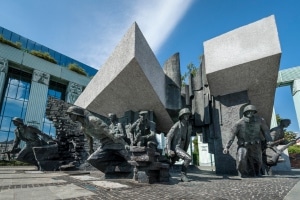
Warsaw is the city of two uprisings which have deeply marked the identity of Poles and Jews, and played a critical role in shaping historical consciousness. Moving statues mark the Ghetto Uprising of 1943, and the Warsaw Uprising of one year later, regarded as the biggest resistance operation in German Nazi-occupied Europe. As an attempt to achieve its goals, the uprising was a failure, but it was also a remarkable success in showing the courage of the Polish nation. Every year at 5 p.m. (W-hour) on August 1st, sirens go off in the Polish capital, and traffic stops throughout the city for a minute’s remembrance, in order to pay tribute to the Heroes of Warsaw.
We visit the Warsaw Rising Museum, which captures the experience of the uprising brilliantly. It will immerse you in the streets of Warsaw in the 1940s. The hopes, the fears, the desire for freedom, and the ultimate despair of defeat are all there. Floor after floor is full of fascinating items, photos, artifacts, leaflets and videos. The City of Ruins, a silence-inducing 5-minute 3D aerial film, recreates a picture of the desolation of ‘liberated’ Warsaw in March 1945. A replica of a Liberator B24-J bomber is also on view.
Following the fall of the uprising, the Germans set about systematically leveling the city. The ones who stayed in the capital for the months ahead hunkered in their shelters, each an island in the ocean of ruins. They have been called Warsaw ‘Robinson Crusoes’. The most well-known one was Wladyslaw Szpilman.
We also visit the Umschlagplatz, where Jews gathered for deportation to the Treblinka extermination camp. It was here that Szpilman saw his family for the last time. By sheer chance he escaped the transport, and eluded capture, living in the ruins of Warsaw.
Time at leisure.
Stories of Survival: The Zookeeper and the Pianist

We begin the day at the villa on the grounds of the Warsaw Zoo.
“The House Under A Wacky Star” will introduce us to the story of the Zabinski family. Their wartime aid to Jews was the subject of the production The Zookeeper’s Wife, directed by Niki Caro.
It was World War II, and the wife of the director of the Warsaw ZOO spotted Nazis approaching the white stucco villa that she and her family inhabited. According to plan, she went straight to her piano and began to play a lively tune by Jacques Offenbach — a signal to Jews being sheltered in the house that they should be quiet and not leave their hiding places. She played Chopin when the coast was clear.
“A haven”, “an ark” – these are words used to describe the ZOO by those who survived WWII there. We will tour the house with the basement chambers, see the piano Antonina played, and the tunnels those escaping the Holocaust hid.
Free time follows the visit.
Musical Evening: The Pianist And The Power Of Music
The culmination of The Pianist is in Szpilman’s miraculous rescue by the German Wehrmacht officer Wilm Hosenfeld, who found a Jewish man vulnerable among the ruins of Warsaw. One of the questions put by the officer was: “What do you do?”, which Szpilman answered: “I am a pianist.” After that, he played Chopin for him. Entranced by Szpilman’s performance, Hosenfeld helped him to survive.
After the war, Szpilman served as director of Polish Radio’s music department. He was the last to play on the airwaves of Polish Radio in 1939 and the first to play in 1945.
Chopin’s music still connects souls across the centuries. We will enter the world of Chopin’s creations, which have earned for him his title of a Poet Of The Piano.
End of the Journey
After breakfast, transfer to Warsaw Airport for your departure flight.