Day 1
Warsaw
Arrival in Warsaw
Independent arrivals at the Warsaw hotel.
Afternoon & Evening:
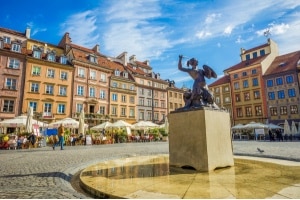
At approximately 4:00 p.m., meet and greet with your tour leader and fellow travelers in the hotel lobby. Following a brief introduction, enjoy a walk to the Old Town. Painstakingly rebuilt from scratch after WWII, it holds a place on the UNESCO World Heritage List. Along the way, visit the Church of the Holy Cross, where Chopin’s heart rests in an urn, brought home by his sister in 1849. The biblical passage inscribed on a pillar reads: “For where your treasure is, there your heart will be also.”
An Unforgettable Musical Feast
We will introduce you to the captivating world of Polish music, filled with warmth, emotional depth, and folk influences. The performance includes works by renowned Polish composers.
Afterward, join in a feast of Polish culinary specialties.
Meals: dinner
Overnight: Sofitel Victoria

Day 2
Warsaw - Poznan
Warsaw sightseeing
Morning:
We begin our day by exploring Warsaw’s rich history, focusing on its resilience during the city’s darkest days in World War II. Known as the city of two monumental uprisings, Warsaw’s identity was profoundly shaped by these events, which left a deep impact on both Polish and Jewish communities. As we move through the city, we will encounter statues commemorating the Ghetto Uprising of 1943 and the Warsaw Uprising of 1944—the largest resistance operation in German Nazi-occupied Europe.
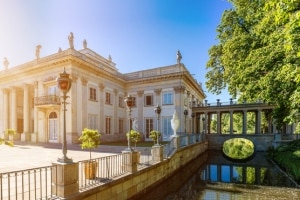
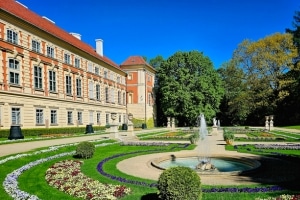
Next, we will take a scenic drive along the Royal Route, experiencing a journey through the layers of Warsaw’s history, culture, and architecture. Our route leads us to Łazienki Park, a beautiful legacy of King Stanisław August, where we’ll find a peaceful setting dedicated to Poland’s most renowned composer, Fryderyk Chopin.
Afternoon & Evening:
We will depart for Poznan, the charming capital of the Greater Poland Province. The remainder of the day will be free for your own explorations. We will spend the night in Poznań.
Meals: breakfast
Overnight: Novotel Poznan Centrum

Day 3
Poznan
Tracing History and Sweetness Face To Face With Tradition
Morning:
Poznan, one of Poland’s urban highlights, is rich in historic monuments and captivating sights. We’ll embark on a guided tour through Poznan’s treasures, beginning at the Old Town Square, where we’ll marvel at the spectacular Renaissance Town Hall and distinctive merchants’ houses. We’ll also visit Cathedral Island (Ostrów Tumski), the city’s oldest neighborhood and the cradle of the Polish state.
Afternoon:
FACE-TO-FACE WITH TRADITION: Poznan’s Sweetest Symbol
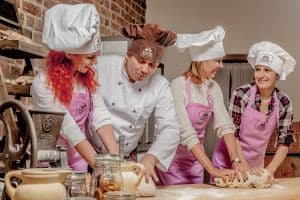
In this 1,000-year-old city, we’ll encounter Poznan’s signature treat—the St. Martin’s croissant, a specialty recognized by the European Union as a Protected Geographical Indication. At the interactive Poznan Croissant Museum, we’ll dive into the history of this iconic pastry. Expect an entertaining show and a tasting session, which promises to be great fun!
Evening:
Enjoy some free time for private sightseeing. Overnight stay in Poznan.
Meals: breakfast
Overnight: Novotel Poznan Centrum
Day 4
Lodz
Discover Lodz: Film, Art, and History
Morning:
Departure for Lodz.
Afternoon:
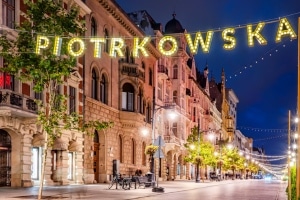
Today, we explore Lodz, a city renowned for its film, fashion, and street art. Often seen as one of Poland’s artistic hubs, Lodz proudly boasts the legacy of the renowned Lodz Film School, whose famous alumni include Andrzej Wajda, Roman Polanski, and Krzysztof Kieslowski. At the heart of the city lies Piotrkowska Street, a lively thoroughfare adorned with sculptures of local icons and a film star avenue that brings the city’s cinematic heritage to life.
Shaped by Polish, German, Jewish, and Russian influences, Lodz is a blend of extravagantly decorated palaces from its industrial past, striking modern architecture, impressive cathedrals, and a wealth of street art. Over 170 buildings in Lodz are covered with vibrant murals, earning it the title of Poland’s largest urban gallery. These murals, created by Polish and international artists, include the iconic work on Piotrkowska 152, once the world’s largest graffiti piece and a Guinness World Record holder.
In the northern part of Lodz, the Radegast Station stands as a poignant memorial to the German Nazi atrocities that impacted Lodz. It was from here that deportations from the Lodz Ghetto to Auschwitz were organized, preserving a solemn part of the city’s history.
Evening:
Free time. Overnight in Lodz (2027 edition: Hotel Puro Lodz).
Meals: breakfast
Overnight: Vienna House by Wyndham Andel’s
Day 5
Sandomierz
Historic Sandomierz: The Jewel of Seven Hills Face To Face With Tradition
Morning:
Departure to Sandomierz.
Afternoon:
Sandomierz, like Rome, is set on seven hills and boasts numerous impressive historical landmarks. With a history dating back over 1,000 years, Sandomierz is home to a well-preserved Old Town, designed in a distinctive medieval checkerboard layout centered around the Market Square. This area features beautiful restored tenement houses and, at its heart, a Renaissance Town Hall—a true architectural gem. We’ll explore its narrow streets, surrounded by charming historic buildings and remarkable relics of the past.
FACE-TO-FACE WITH TRADITION: Striped Flint in Jewelry
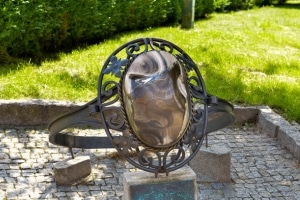
Near the Market Square, you’ll discover an intriguing tribute to striped flint, a rare mineral unique to the Sandomierz region. Conceived by local artist Cezary Lutowicz, this installation features a large flint stone ring and celebrates the unique beauty of striped flint. Lutowicz, who both discovered and popularized striped flint in jewelry, has since become the ambassador of this distinctly Polish stone. Thanks to his efforts, it was adopted as a symbol of Polish diplomacy, and in 2007, Sandomierz was named the World Capital of Striped Flint—known as the stone of optimism.
After that, we’ll head to Zamosc for an overnight stay.
Evening:
Free time.
Meals: breakfast
Overnight: Zamojski
Day 6
Zamosc
Zamosc: A Renaissance Marvel in Poland
Morning:
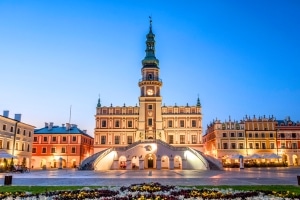
Zamosc, a UNESCO World Heritage site in southeastern Poland, was established in the 16th century by Chancellor Jan Zamoyski. Modeled after the Italian concept of an “ideal city” and designed by Padua-born architect Bernardo Morando, Zamosc is considered a pinnacle of Renaissance urban planning. Situated on a key trade route connecting Western and Northern Europe with the Black Sea, the town quickly attracted Jewish, Italian, Armenian, Hungarian, and Greek merchants, creating a vibrant multicultural community of up to twelve nationalities. Today, the Old City of Zamosc preserves this unique blend of Italian and Central European architectural traditions. We’ll explore these highlights during a guided tour.
Afternoon & Evening:
Enjoy free time for personal exploration. Overnight in Zamosc.
Meals: breakfast
Overnight: Zamojski
Day 7
Lancut - Medynia Glogowska - Krynica Zdroj
Polish Craft and Royal Elegance in One Day Face To Face With Tradition
Morning:
Departure for Lancut Castle, a striking example of Baroque architecture that once hosted illustrious guests such as King Louis XIII of France and Emperor Franz Joseph of Austria. Inside, we’ll admire furnishings crafted by renowned artisans from France, England, and Austria during the 18th and 19th centuries.
Afternoon:
Our next stop is Medynia Glogowska.
FACE-TO-FACE WITH TRADITION: The Ones Who See with Their Hands
Pottery in the villages around Lancut tells a story of innate talent and deep-rooted tradition. Some artisans learned their craft at their parents’ knees, while others have embraced it more recently, continuing the legacy with equal passion. At the pottery center in Medynia Glogowska, we’ll experience the dedication and care infused into each piece. Local artists will guide us through this mindful, time-honored craft. We’ll then dine at the historic Potter’s Inn, where we’ll try proziaki — traditional bread rolls served with marmalade or cheese, a true taste of local heritage.
A Renowned Spa Town
Afterwards, we’ll transfer to Krynica-Zdroj, the pearl of Polish spa resorts nestled among the valleys of the Beskid Sadecki, a picturesque mountain range in the Western Carpathians. We will stay overnight there.
Evening:
Free time. Overnight in Krynica-Zdroj.
Meals: breakfast, lunch
Overnight: Czarny Potok Resort&SPA
Day 8
Powroznik - Krynica Zdroj
Nikifor - an Icon of Krynica Zdroj & Lemko Heritage Tour
Morning:
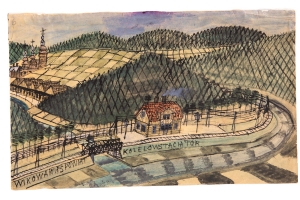
A deep nostalgia lingers over Lemkovyna, the ancestral homeland of the Lemko minority, nestled in the Carpathian Mountains along the Poland–Slovakia border. Following WWII, the Lemkos were forcibly resettled by the Communist authorities, uprooting them from their native lands. Perhaps the most recognizable Lemko of all time, Andy Warhol, serves as a reminder of this unique heritage. Today, however, we’ll focus on the legacy of another celebrated Lemko artist, Nikifor Krynicki.
We’ll see Krynica through the eyes of its most devoted admirer, Nikifor. This self-taught artist, now recognized as one of the world’s finest naive painters, immortalized Krynica in his work. His paintings, once underrated, have since been exhibited in Paris, Amsterdam, New York, and Israel. We’ll explore the Museum of Nikifor.
Just nearby, we’ll visit Powroznik, home to the UNESCO-protected Church of St. James the Apostle. This wooden tserkva is a perfect example of the Western Lemko style, with its oldest section dating back to 1600.
During a guided walk through Krynica, we will soak up its noble spa architecture and craftsmanship that has all but disappeared elsewhere. The promenade, the vibrant heart of this town, is lined with quaint cafes, boutique shops, and scenic green spaces that invite visitors to take leisurely strolls.
Mineral waters are among the natural treasures of Krynica Zdroj. Their therapeutic properties come from unusually high mineralization — something you can easily experience by sampling the famous Slotwinka, Tadeusz, Zuber, Jan, and Mieczyslaw waters in one of the pump rooms.
Lunch will feature Lemko cuisine classics.
Afternoon & Evening:
Enjoy a leisurely afternoon and evening. Overnight stay in Krynica Zdroj.
Meals: breakfast, lunch
Overnight: Czarny Potok Resort&SPA
Day 9
Bobowa - Krakow
Bobbin Lace and Poland’s Historic Heart Face To Face With Tradition
Morning:
FACE-TO-FACE WITH TRADITION: Lacemaking
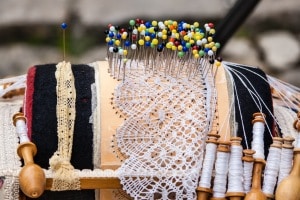
Lacemaking may seem like a dying art, but in Bobowa it has never lost its charm. The town is renowned for its beautiful handmade bobbin lace, crafted by skilled artisans whose work has brought fame to the region. Each year, Bobowa hosts the International Bobbin Lace Festival, attracting lace-makers from across Europe.
If anyone embodies the spirit of bobbin lace here, it is Ewa Szpila. She has not only won the festival’s top award multiple times but also holds the title of the fastest lace-maker. Ewa has carved out a unique niche by creating lace jewelry and breathing new life into this traditional art. Today, she will share the secrets and challenges of this intricate craft, helping to preserve its time-honored techniques.
Afternoon:
Poland’s Historic Heart: A Journey through Krakow
We’ll transfer to Krakow, a UNESCO World Heritage site and one of Poland’s most historically significant cities.
Our visit will begin with a walk along its centuries-old defensive walls and through the Old Town Market Square, remarkably preserved for nearly 700 years.
We’ll witness the unveiling of the world’s largest wooden altar, carved by Veit Stoss between 1477 and 1489, in the Church of St. Mary. From one of its twin towers, the Hejnał Mariacki — a haunting trumpet call — is played every hour, famously ending mid-note.
Our tour continues with a relaxed exploration of the legendary Wawel Castle, including the Cathedral and its historic Belfry.
Evening:
We’ll enjoy a welcome evening in the heart of Kazimierz, the city’s historic Jewish quarter. Dinner will be accompanied by traditional klezmer-style music.
Overnight stay in Krakow.
Meals: breakfast, dinner
Overnight: Kossak
Day 10
Krakow
Krakow – A Day at Your Own Pace
Morning:
Why is Poland such a unique place in the world? Explore this question with insights from Annamaria Orla-Bukowska, Ph.D., a social anthropologist at the Jagiellonian University. In her lecture, “The Great Personalities of Poland: People Who Changed Poland and the World,” she highlights the lives and achievements of remarkable individuals on global history.
Take the rest of the day to enjoy Krakow at your own pace. Stroll through its streets, revisit places that caught your eye, or simply relax and soak in the atmosphere. You might choose to unwind in a café, browse local shops, or explore more of the city’s history – whatever feels right for you.
Overnight stay in Krakow.
Meals: breakfast
Overnight: Kossak
Day 11
Wadowice - Nikiszowiec
Wadowice and Silesian Soul
Morning:
It’s time to leave majestic Krakow behind.
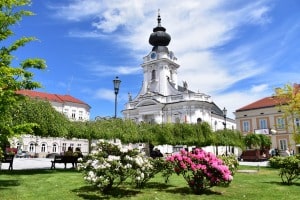
Today, we’ll explore the early years of Saint Pope John Paul II with a visit to Wadowice, his birthplace and childhood home. Here, you’ll find the Wojtyla apartment, now transformed into a central exhibit in a fine museum. Wadowice is a place Pope John Paul II often recalled with warmth, especially memories of his school days and his favorite café, where he enjoyed cream cake.
Our journey continues with a visit to Nikiszowiec, a historic miners’ settlement that offers a unique perspective on Polish social architecture. This quaint district in Katowice, renowned for its striking design, offers a window into Silesia’s industrial heritage.
For lunch, we’ll savor traditional Silesian cuisine at a local restaurant. This region’s culinary specialties are hard to beat, and the famous Silesian dumplings (with their signature hole), beef roulade, and braised red cabbage are unmissable highlights.
Afternoon&Evening:
Return to Krakow, with free time before the overnight stay.
Meals: breakfast, lunch
Overnight: Kossak
Day 12
Ojcow National Park – Lowicz - Warsaw
Jurassic Landscapes & The Eagle’s Nest Trail Face To Face With Tradition
Morning: Picturesque Jurassic Landscape
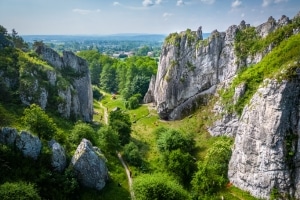
The area surrounding Krakow is filled with natural beauty. Ojcow National Park features dramatic limestone cliffs, tranquil valleys, castle ruins, caves, and vineyards. Many of the once-formidable fortresses along Poland’s western border were built by King Kazimierz the Great to protect the nearby capital, Krakow. Among them, the cliff-perched Pieskowa Skala Castle offers breathtaking views of the legendary “Hercules’ Club” rock formation and boasts a charming Renaissance courtyard.
FACE-TO-FACE WITH TRADITION: In the Kingdom of Ojcow Trout
Within Ojcow National Park, the famed “Ojcow Trout” is one of Lesser Poland’s proud culinary traditions. The trout ponds, with their crystal-clear water and unique microclimate, were first developed in the 1930s. Decades later, Magdalena Wegiel and Agnieszka Sendor revived these forgotten ponds, restoring them to life. Magdalena’s pioneering work in sustainable fish farming has earned her recognition as one of Europe’s most innovative female farmers. Today, their family business is a model of eco-friendly and ethical practice. We’ll savor smoked trout from this prestigious, heritage-rich fish farm.
Afternoon:
FACE-TO-FACE WITH TRADITION: Learn the Polonaise, Poland’s Royal Dance
Exploring new places is as enriching as meeting the people who keep traditions alive with their passions and talents. On our way to Warsaw, we’ll stop at the charming, art-filled cottage of Katarzyna and Wojtek Gronecki, located near the ruins of an old primate’s castle in Lowicz, which they own. This region is rich with folk traditions that remain vibrantly alive.
Here, we’ll enjoy a home-hosted meal of regional dishes, admire a display of colorful paper cut-outs, and take part in lively entertainment. You’ll also have the chance to learn the Polonaise, Poland’s royal national dance. Once cherished by the nobility, it remains an essential feature of every high school graduation ball. Before departing for Warsaw, you’ll receive a handmade keepsake — a special memento crafted by this artistic family.
Evening:
Free time in Warsaw. Overnight stay.
Meals: breakfast, lunch, dinner
Overnight: Airport Okecie
Day 13
Warsaw
Farewell day
Morning:
Bid farewell to Poland as you depart independently. A complimentary shuttle bus is available from the hotel to Warsaw Airport for your convenience.
Optional excursions
Make your time in Poland even more memorable with an optional excursion. Visit the historic Auschwitz & Birkenau site or discover the wonders of the Wieliczka Salt Mine, a UNESCO World Heritage Site. Both trips can be arranged to fit your schedule.