Day 1
Warsaw
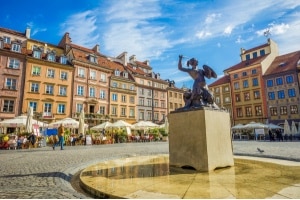
Arrival to Warsaw
Private transfer from Warsaw Airport to your hotel. The remainder of the day is at leisure.
The history of Warsaw evokes powerful emotions in every visitor, and many renowned filmmakers have made it their point of reference. A notable example is The Pianist by Roman Polanski — a WWII Holocaust drama about human resilience and the power of music to overcome unimaginable adversity. It tells the true story of Wladyslaw Szpilman, a Polish-Jewish virtuoso pianist and composer, and his unlikely survival under German Nazi occupation in Warsaw. The film won three Academy Awards in 2003.
Day 2
Warsaw
Warsaw’s Jewish Legacy and the Power of Music
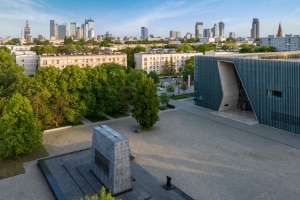
Today’s guided tour explores key sites of Jewish heritage in Warsaw: the POLIN Museum of the History of Polish Jews, the Ghetto Heroes Monument, the bunker at 18 Miła Street, and the Umschlagplatz – the site of deportations to Treblinka. The afternoon is at leisure. In the evening, enjoy a musical program inspired by the legacy of Wladyslaw Szpilman and the music of Chopin.
The POLIN Museum offers a powerful journey through the centuries of Jewish life in Poland — from medieval trade routes to contemporary times. Its striking entrance symbolizes the rupture caused by the Holocaust.
Warsaw is a city marked by two heroic uprisings: the 1943 Warsaw Ghetto Uprising and the Warsaw Uprising of 1944. The sites visited today reflect both devastation and resistance — from the location of the main ghetto bunker to the place where Szpilman saw his family for the last time.
The evening program recalls one of the most poignant moments in The Pianist, when Szpilman was discovered in hiding by a German officer, Wilm Hosenfeld. When asked what he did for a living, Szpilman replied, “I am a pianist,” and began to play Chopin. Moved by the performance, the officer helped him survive. This story, told in Szpilman’s memoir The Death of a City, reflects the enduring power of music in the darkest of times.
Day 3
Warsaw
Wartime Courage
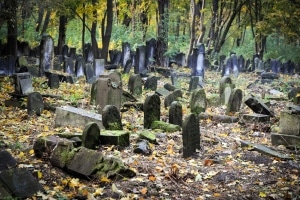
Today begins with a visit to the Warsaw Zoo and the villa known as “The House Under the Crazy Star”, where the Zabinski family hid Jews during the Nazi occupation. You will explore the house, including its secret chambers and original piano. The program continues with visits to the Nozyk Synagogue – the only surviving prewar synagogue in Warsaw – and the Jewish Cemetery, where many notable figures are buried. The tour concludes with a stop at the Monument to the Children of the Ghetto and the statue of Janusz Korczak. The remainder of the day is at leisure.
During World War II, the Warsaw Zoo became an extraordinary hiding place for Jews. Jan and Antonina Żabiński risked their lives to shelter those fleeing the ghetto. Antonina used piano music as a secret signal: Offenbach’s melodies warned of danger, Chopin’s meant safety.
The Jewish Cemetery holds the graves of scholars, artists, and activists — including Chaim Soloveitchik, Ester Rachel Kaminska, Solomon Anski, and Ludwik Zamenhof.
One of the most moving places is the memorial to Janusz Korczak, the educator and writer who refused to abandon the children of his orphanage. He accompanied them to Treblinka, where they all perished. As Szpilman wrote, “Korczak’s true value was not in what he wrote, but that he lived as he wrote.”
Day 4
Warsaw - Lodz - Warsaw
Industrial Legacy and Jewish Memory in Lodz
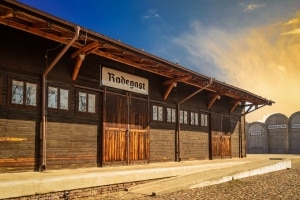
Today’s full-day excursion takes you to Lodz, a city shaped by four cultures — Polish, Jewish, German, and Russian. The tour includes the lavish Poznanski Palace (now a museum), with an exhibition dedicated to pianist Artur Rubinstein. You will also visit the largest Jewish cemetery in Europe, Radegast train station (the site of the Litzmannstadt Ghetto Monument), and the Survivors’ Park. In the afternoon, return to Warsaw.
In the 19th century, Lodz developed into a major textile center, and Jewish entrepreneurs played a central role in its growth. Their factories, philanthropy, and cultural contributions left a lasting mark on the city’s identity.
The Jewish cemetery in Lodz holds over 160,000 graves — a silent testament to the once-thriving Jewish community. Radegast Station, from which Jews were deported to death camps, stands today as a stark memorial.
Inside Poznanski Palace, the Rubinstein exhibition honors the legacy of one of the world’s greatest interpreters of Chopin — a symbol of Jewish talent and cultural influence in Poland.
Day 5
Lublin
Centers of Learning and Lost Worlds
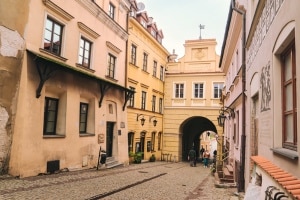
This morning, depart for Lublin — once one of the most important centers of Jewish scholarship in Europe. Highlights include the Chachmei Lublin Yeshiva, the Old Jewish Cemetery, and the Grodzka Gate – once a symbolic passage between Christian and Jewish quarters. You’ll also visit the Grodzka Gate–NN Theatre Centre, dedicated to preserving the memory of Lublin’s Jewish past. The afternoon is at leisure for your own exploration. Overnight in Lublin.
Lublin was known as the “Jewish Oxford” for its intellectual and religious life. The Chachmei Lublin Yeshiva attracted students from across Europe, while the cemetery is the resting place of legendary figures like Yaakov Yitzhak Horowitz, the Seer of Lublin.
The Grodzka Gate today functions as a cultural and memory center, where architecture and archives preserve the vanished world of Lublin’s Jewish district. The site also evokes Isaac Bashevis Singer’s The Magician of Lublin, whose protagonist Jasha Mazur once walked these very streets — a literary echo of a lost world.
Day 6
Lublin - Chmielnik - Krakow
Shtetl Life Remembered and Krakow’s Jewish Heart
Today you travel from Lublin to Krakow, stopping en route in the town of Chmielnik. There, you’ll visit a beautifully restored synagogue, now a modern museum that tells the story of Jewish life in the shtetl through interactive exhibits, personal testimonies, and music. Afterward, continue to Krakow and enjoy a guided walk through the historic Kazimierz district, home to centuries of Jewish life. Visit the Remuh Synagogue and its Renaissance cemetery. Along the way, stop by the Jan Karski Bench — honoring the Polish resistance emissary who sought to alert the world to the Holocaust.
Before 1939, Jews made up more than 80% of Chmielnik’s population. The restored synagogue now serves as a moving tribute to the cultural richness of shtetl life, including a striking glass bimah — a symbol of memory and resilience.
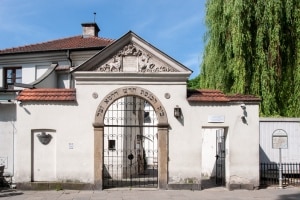
In Krakow, the Kazimierz district offers a rare glimpse into Jewish life before the war. Its streets, synagogues, and cafés remain alive with echoes of tradition. The Remuh Synagogue and cemetery are among the oldest surviving sites of Jewish worship in the city. Jan Karski’s commemorative bench reminds visitors of one man’s courageous effort to confront the world with the truth of genocide.
Day 7
Krakow - Auschwitz - Krakow
The Symbol of the Holocaust
Today’s journey takes you to Auschwitz-Birkenau — the largest and most infamous of the former German Nazi concentration and extermination camps. Your guided visit will cover both Auschwitz I and Auschwitz II-Birkenau, offering a sobering look at one of history’s darkest chapters. Return to Krakow in the afternoon. The rest of the day is free for rest or personal reflection.
Auschwitz-Birkenau witnessed the deportation of at least 1.3 million people, mainly Jews and Poles. It stands today as a symbol of the Holocaust and a call to remembrance. Among the many acts of courage connected to this place was that of Witold Pilecki, a Polish resistance fighter who voluntarily entered the camp to gather intelligence — and whose reports were among the first to alert the world to the genocide.
This visit is not only a confrontation with the enormity of human suffering, but also with the resilience and bravery of those who endured it or resisted it — often in silence, and at great personal cost.
Day 8
Krakow
Krakow’s Ghetto and the Legacy of Schindler
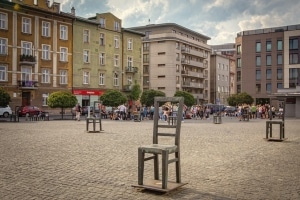
The Podgorze district of Krakow is a reminder of a poor and harsh time, as it was the actual Jewish ghetto during the Nazi occupation. Metal chairs scattered across Ghetto Heroes Square — the main site of deportations of Krakow’s Jews — serve as a powerful memorial that won’t let you pass without remembering its tragic past. Few Jews managed to escape from the ghetto; Roman Polanski, the Oscar-winning filmmaker, is a well-known example.
Schindler’s List
Steven Spielberg’s Schindler’s List brought to the screen a story that had long gone untold. Oskar Schindler, a German industrialist, came to Krakow in search of profit. In the end, however, he saved the lives of more than a thousand Polish-Jewish refugees by employing them in his factories. A thought-provoking exhibition at Schindler’s Factory tells the story of Schindler and the Jewish prisoners from the Plaszow camp.
Meeting
Cheder Café, located in a former prayer house, is a wonderful place to meet Robert Gadek – Deputy Director of the Jewish Culture Festival, one of Krakow’s premier cultural events. The festival presents contemporary Jewish culture to an international audience of around 30,000 people annually. During this meeting, we’ll talk about the phenomenon of the festival, as well as the themes of memory and dialogue between Poles and Jews.
The remainder of the day is at leisure.
Day 9
Farewell and Departure
Private transfer to the airport for your departure flight.
If you wish to extend your stay in Poland or explore other regions, we will be happy to assist you with tailored post-tour arrangements. Private transfers to alternative destinations can also be arranged on request.